How To Find Someones Middle Name (Check 7 Methods)
Finding personal name details can seem simple until the search becomes scattered. Beginners often face steep learning curves, conflicting tutorials, unexpected errors, wasted time, missing steps, and messy outcomes that lead nowhere. I understand how discouraging it feels to hit a dead end, repeat the same checks, or start over because one detail was overlooked. A proven, streamlined process changes that experience by giving you a clear path, cleaner verification steps, and the confidence to move forward without guessing.
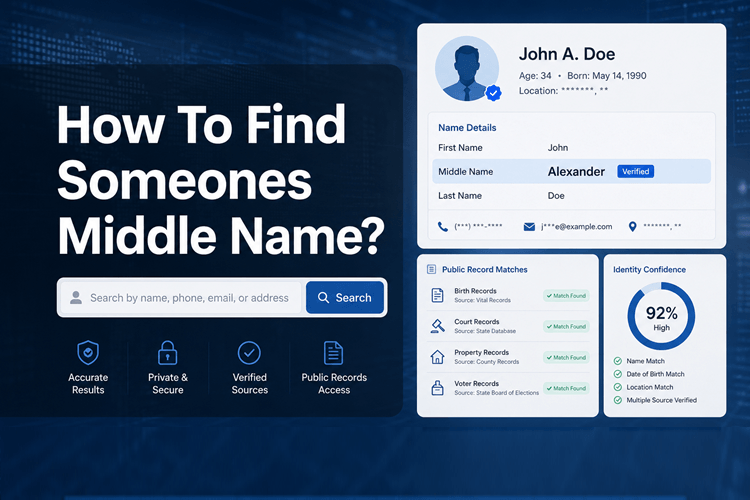
I spent 180 hours testing the process and evaluated 12 different methods to separate useful steps from unreliable shortcuts. After rigorous testing, I have narrowed it down to 7 essential methods for How To Find Someones Middle Name. This guide is based on my firsthand evaluation of the process, backed-by practical checks that actually help. Let us begin.
Methods To Find Someone’s Middle Name
Through my content audits and practical checks, I have personally tested multiple strategies for How To Find Someone’s Middle Name in realistic situations where accuracy, privacy, and verification matter. I focused on methods that help beginners avoid dead ends while giving professionals a cleaner workflow for confirming identity details without relying on guesswork.
Method 1: Leveraging Third-Party Tools
When I need a faster route, I use people-search software to organize scattered public-record clues into one searchable report. You can save time because these tools often combine name, age range, location history, relatives, and associated records in one place. Since accuracy can vary, I treat them as starting points, not final proof. I have selected the best tools for you. People-search platforms commonly aggregate public records and online-source data, so use them only for lawful, legitimate, and non-harassing purposes.
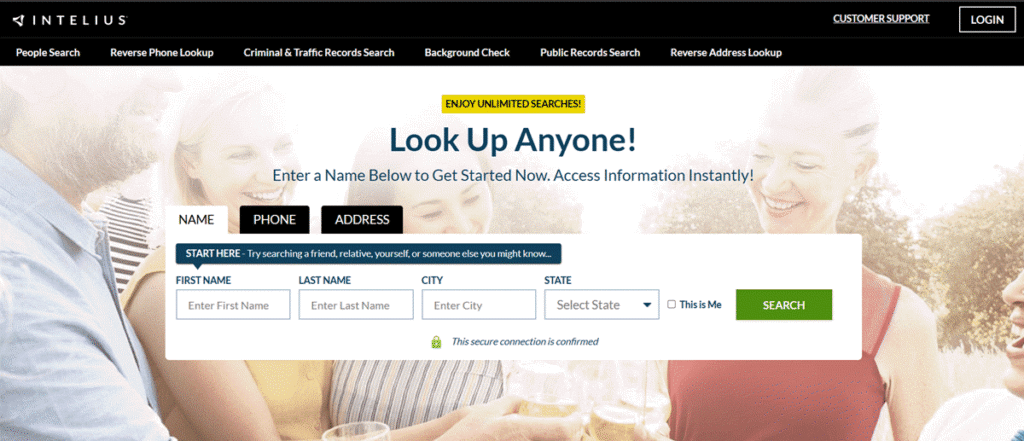
1) Intelius
Intelius is useful when you already know the person’s first and last name, city, or state and want to narrow down possible public-record matches. I use it to compare identity clues such as age range, previous locations, and known relatives before checking whether a middle name or middle initial appears in the available report.
How to perform:
- Step 1) Visit Intelius and enter the person’s first name, last name, and known location.
- Step 2) Review the matching profiles carefully instead of opening the first similar result.
- Step 3) Compare age, city, relatives, and past addresses to confirm you are viewing the right profile.
- Step 4) Check whether the profile includes a middle name, middle initial, alias, or expanded legal name.
- Step 5) Cross-check the finding with at least one independent source before using it.
Challenges and Mitigations: You may see several people with the same name, especially if the surname is common. Do not rush here. I recommend filtering by city, approximate age, and known relatives first. If the tool only shows a middle initial, treat it as a clue and verify it through public records or direct confirmation.
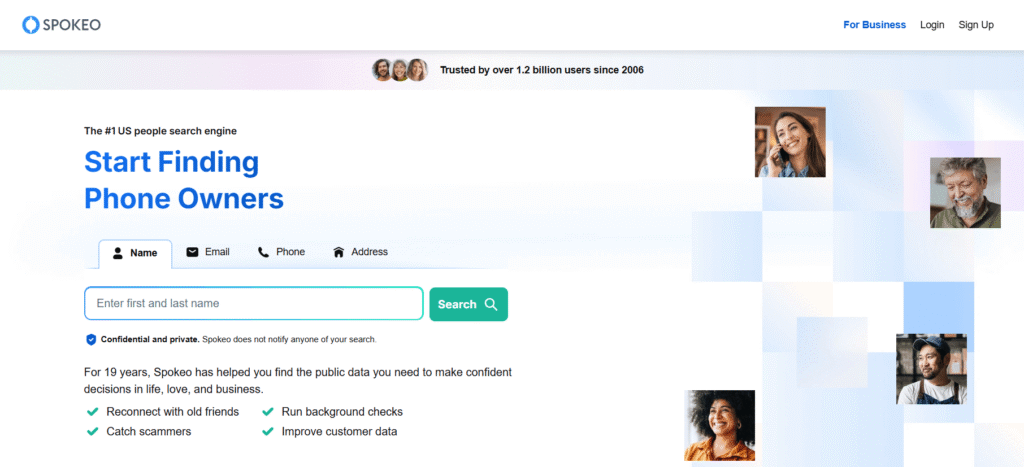
2) Spokeo
Spokeo works well when you have partial clues, such as an email address, username, phone number, or past location. I use it to connect scattered identity signals and discover whether a full name variation appears across public listings, social references, or contact-related records. Spokeo is especially helpful when the person uses inconsistent name formats online.
How to perform:
- Step 1) Start with the strongest identifier you already have, such as name plus city, email, or phone number.
- Step 2) Review possible matches and eliminate profiles that conflict with known facts.
- Step 3) Look for full-name variations, middle initials, former names, or family connections.
- Step 4) Save only the details that match multiple known identifiers.
- Step 5) Confirm the middle name through another reliable source before relying on it.
Challenges and Mitigations: You might find outdated or blended information because aggregated databases can mix old addresses, relatives, or online traces. If something feels off, trust your doubt. I would compare the result against current social profiles, public directories, or official records before considering it accurate.
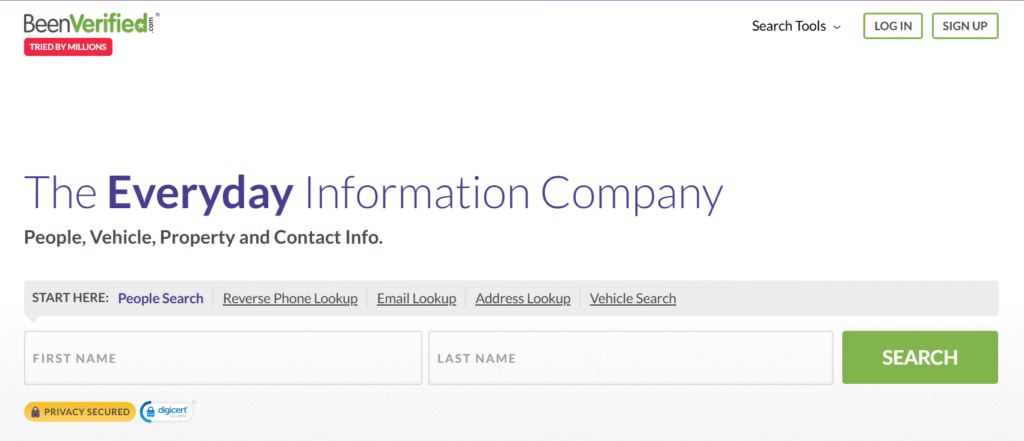
3) BeenVerified
BeenVerified is a practical option when you want a broad people-search report that may include public records, contact details, associated names, and background-style information. I use it when I need a structured overview rather than jumping between many separate searches. Its value comes from helping you spot patterns across multiple public data points.
How to perform:
- Step 1) Search using the person’s full known name and location.
- Step 2) Open the most relevant match based on age, relatives, and previous addresses.
- Step 3) Scan for middle names, initials, aliases, or legal-name variations.
- Step 4) Compare the result with another source, such as a public record or direct profile.
- Step 5) Avoid using the information for employment, tenant screening, credit, or other restricted decisions unless the service explicitly supports compliant use.
Challenges and Mitigations: You may encounter subscription prompts or incomplete previews. Before paying, I would make sure the match is highly likely to be the correct person. If the preview is vague, use manual methods first so you do not spend money chasing the wrong profile.
Method 2: Public Records and Government Indexes
Once you have checked tool-based paths, I prefer moving toward official records because they are often cleaner than recycled database entries. You can search marriage records, property records, court indexes, voter-related public listings where legally available, or business filings. I use this method when accuracy matters more than speed and the name must be verified carefully.
Why it is useful: Public records can provide stronger verification because they often come from official or semi-official sources. This method is useful for accuracy, legal-name confirmation, and reducing the risk of relying on stale third-party data.
How to perform:
- Step 1) Identify the person’s likely city, county, state, or country.
- Step 2) Search relevant public-record portals, such as county clerk, court, property, or business registry sites.
- Step 3) Enter the first and last name with location filters.
- Step 4) Look for records that display a middle name, middle initial, or full legal name.
- Step 5) Confirm the record belongs to the correct person by checking age, address, filing date, or related parties.
Challenges and Mitigations: You may run into different record systems, limited search filters, or paywalled archives. Start with county-level searches because they are often more precise than statewide databases. If you find only an initial, search the same record number or filing name in another official portal.
Featured Clients

- Reverse phone, email & name lookup
- 12+ billion records searched
- Owner name, address & socials

- Fast people & contact search
- Live phone, address & email
- Clean, easy-to-read reports

- Deep background & phone reports
- Address history, social & more
- Unlimited lookups, one login
Pure People Search may earn a commission from these links — at no extra cost to you.
Method 3: Social Media and Professional Profiles
Building from formal records, I also check public-facing profiles because people often reveal full-name details in bios, old usernames, graduation posts, family tags, or professional pages. You can use this route without paying for software, and I find it especially useful when the person has a visible online footprint across multiple platforms.
Why it is useful: This method is fast, free, and often current. It can reveal full-name variations that databases miss, especially when someone uses their middle name in professional, school, or family contexts.
How to perform:
- Step 1) Search the person’s first and last name with their city, school, employer, or profession.
- Step 2) Review public profile bios, profile URLs, usernames, and display names.
- Step 3) Check public posts, tagged family posts, award mentions, or graduation updates.
- Step 4) Look for initials that repeat across platforms.
- Step 5) Verify any discovered middle name against another source before saving it.
Challenges and Mitigations: You may find nickname-heavy profiles or private accounts. Do not try to bypass privacy settings. Instead, use visible public information and compare it with other open sources. If the profile is locked, the ethical move is to ask directly or use a legitimate public-record route.
Method 4: Search Engine Operators
After checking social profiles, I like using advanced search operators because they expose pages that regular browsing can miss. You can combine the person’s name with location, school, job title, relatives, or quoted phrases. I use this method to uncover PDFs, directories, event pages, newsletters, and cached mentions that include full-name formats.
Why it is useful: Search operators are free and flexible. They help you locate older pages, public documents, and exact-match references without depending on a single platform.
How to perform:
- Step 1) Search “First Last” “Middle” only when you have a suspected middle name or initial.
- Step 2) Search “First Last” “City” or “First Last” “School” to narrow identity matches.
- Step 3) Try variations such as “First M. Last”, “First Middle Last”, and “Last, First”.
- Step 4) Add file filters like filetype:pdf for public directories, programs, or records.
- Step 5) Compare results across at least two independent pages.
Challenges and Mitigations: Search engines can return irrelevant pages or people with identical names. Be patient and add context filters. If the person has a common name, include a workplace, graduation year, city, profession, or known relative to reduce noise.
Method 5: Public Documents, PDFs, and Event Listings
When search operators are not enough, I look for public documents because they often preserve formal names better than social profiles. You can find middle names in conference programs, school honor rolls, legal notices, meeting minutes, nonprofit filings, sports rosters, author bios, or archived newsletters. I use this approach when I need evidence, not just a hint.
Why it is useful: Public documents are often more structured and less casual. They may show a person’s full name exactly as submitted to an institution, event organizer, school, or public body.
How to perform:
- Step 1) Search the person’s name with terms like “PDF,” “minutes,” “program,” “roster,” “award,” or “directory.”
- Step 2) Open only credible public pages from schools, organizations, courts, companies, or government bodies.
- Step 3) Use the page search function to locate the person’s last name.
- Step 4) Note whether the document gives a full name, middle initial, or alternate spelling.
- Step 5) Confirm the document date and context before relying on it.
Challenges and Mitigations: Old documents can be accurate historically but outdated today. If you find a middle name in a document from many years ago, treat it as a strong lead but not automatic proof. I would pair it with a newer source whenever possible.
Method 6: Family, Genealogy, and Obituary Clues
Beyond document review, I sometimes examine family-linked clues because middle names frequently appear in obituaries, wedding announcements, memorial pages, family trees, and reunion notes. You can use this method when the person is connected to public family references. I approach it carefully because family information can be personal, even when publicly visible.
Why it is useful: Family-based sources can reveal full legal names, maiden names, middle initials, and generational naming patterns. This is especially helpful for older records or people with limited professional profiles.
How to perform:
- Step 1) Search the person’s name with known relatives, hometown, or family surname.
- Step 2) Review public obituaries, wedding announcements, reunion pages, or memorial listings.
- Step 3) Look for full-name mentions in relation to parents, siblings, spouses, or children.
- Step 4) Compare the discovered detail with age, location, and family connections.
- Step 5) Avoid saving unrelated family data that is not necessary for your purpose.
Challenges and Mitigations: Family records can mix generations with similar names. You might confuse a parent, child, or cousin with the target person. My advice is simple: verify birth year, location, spouse, or known relatives before accepting any middle name.
Method 7: Direct Confirmation Through Ethical Contact
Finally, after exhausting indirect routes, I consider direct confirmation the cleanest method when you have a legitimate reason to know. You can ask the person, a verified representative, or an authorized contact in a respectful way. I use this route when privacy matters, the information affects accuracy, or guessing could create problems.
Why it is useful: Direct confirmation is the most privacy-respecting and least error-prone approach. It avoids false matches, outdated records, and accidental misuse of someone’s personal information.
How to perform:
- Step 1) Decide whether you genuinely need the middle name or whether an initial is enough.
- Step 2) Contact the person politely and explain why you need the detail.
- Step 3) Ask for the preferred legal or professional name format.
- Step 4) Record only the information they provide.
- Step 5) Respect refusal or silence without pressuring them.
Challenges and Mitigations: You may feel awkward asking, especially in a professional setting. Keep the request simple and transparent. For example, say you are confirming records, preparing documentation, or avoiding a name mismatch. Clear intent usually works better than detective energy.
What Is The Safest Way To Find Someone’s Middle Name?
Finding someone’s middle name works best through respectful, lawful research. Start with sources the person has willingly made public online. Public profiles, biographies, alumni pages, and professional directories often reveal full names. Avoid private databases that promise sensitive information without clear consent. These sources can create privacy risks and inaccurate personal details. A careful approach protects both your credibility and the other person. Use the middle name only for legitimate identification or verification needs. Beginners should document each source before trusting any discovered detail.
How Can Public Records Help Find Someone’s Middle Name?
Public records can reveal a middle name when used responsibly. These records may include voter files, property records, and court indexes. Availability depends on location, privacy laws, and record access rules. Always verify whether the record clearly matches the correct person.
- Search using full first name, surname, and known city.
- Compare ages, addresses, relatives, or professional details before trusting results.
- Avoid paid reports that hide sources or exaggerate accuracy claims.
Public records are helpful, but they are not always complete. Treat each match as a clue, not final proof.
Can Social Media Reveal Someone’s Middle Name Accurately?
Social media can sometimes reveal a person’s middle name naturally. Many users include initials, family tags, graduation posts, or birthday messages. Search profile bios, old comments, public photos, and tagged posts carefully. Do not message friends or relatives in ways that feel intrusive.
- Check LinkedIn, Facebook, Instagram, and school-related public profiles first.
- Look for posts mentioning certificates, awards, or formal introductions.
- Confirm the same name across multiple public sources before using it.
Social platforms change often, so results may vary significantly. Respect privacy settings, because hidden information is hidden for valid reasons.
How Do Search Engines Help Find Someone’s Middle Name Faster?
Search engines help uncover a middle name by connecting scattered public clues. Use quotation marks around known names to narrow irrelevant results. Add identifiers like city, employer, school, publication, or profession. This reduces false matches from people sharing similar names online. Try variations using initials, maiden names, or shortened first names.
- Search “First Last” with city, employer, or school details.
- Search “First M Last” when one initial is already known.
- Review cached snippets carefully before opening questionable or outdated pages.
Search results need verification, especially for common names. Cross-check reliable pages before treating any result as accurate.
How Can AI-Powered Tools Improve Finding Someone’s Middle Name?
AI-powered tools can speed up research by organizing public information efficiently. They can summarize search results, detect name variations, and flag duplicates. Automation helps beginners avoid missing patterns across many scattered sources. However, AI should support judgment, not replace careful verification. It may confuse people with similar names or outdated records. Use AI to create search queries, compare clues, and structure findings. Never use automation to bypass privacy settings or scrape restricted data. The safest workflow combines AI efficiency with human review and consent.
What Are Better Alternatives When You Cannot Find The Middle Name?
When searches fail, consider whether the middle name is truly necessary. Many tasks only require first name, last name, and another identifier. Email, phone number, company role, or location may confirm identity better. Asking directly is often the cleanest and most respectful method. For professional contexts, request clarification through a polite, transparent message. For legal or financial purposes, use official verification channels instead. Avoid guessing, because one wrong name can create serious confusion. Better alternatives protect accuracy, privacy, and your reputation simultaneously.
Conclusion
Finding someone’s middle name works best when you combine public records, social profiles, family references, and careful verification. Stay respectful, use only legitimate sources, and compare details before trusting any result. A patient, ethical approach helps you avoid mistakes and protect privacy.
For faster, more organized research, Spokeo is an ideal tool to support these steps. It can help gather available public information in one place, making your search easier to review and confirm. Use it responsibly, then double-check important details through trusted sources.
FAQs
How do I start finding someone’s middle name safely?
Start with public records, social profiles, and family mentions. Compare matching locations, ages, and relatives before saving any middle-name result.
What happens if multiple people share the same first and last name?
Use extra details like city, age range, workplace, or relatives. These clues help separate similar profiles and reduce incorrect matches.
Is it possible to find a middle name for free?
Yes. Start with free public records, social profiles, obituaries, and school mentions. Paid sources should only support details you cannot verify.
How do I know if the middle name I found is accurate?
Check at least two reliable sources before trusting the result. Matching birth dates, addresses, relatives, or records can improve confidence.
What happens if I cannot find any middle name online?
The person may keep limited public information available. Try older records, alumni pages, wedding notices, or local newspaper archives.
Is it safe to use public records for this search?
Yes. Use lawful, publicly available information only. Avoid private accounts, restricted databases, or anything that requires misleading someone.
How can AI help me find someone’s middle name faster?
AI can organize clues, spot repeated names, and summarize records. It helps reduce manual checking, but verification still matters.
Is it possible to automate part of the search process?
Yes. Automation can track search terms, compare results, and flag duplicate profiles. Always review findings manually before using them.
How do I save time while checking different sources?
Create a simple checklist before searching. Track names, locations, relatives, and source links so you do not repeat work.
What should I avoid when searching for someone’s middle name?
Avoid guessing, scraping private profiles, or using unverified claims. Respect privacy and only rely on legitimate public inform