When a phone number keeps calling you, and you’re left wondering who it belongs to, you’re not alone. Whether you’re dealing with unknown callers or potential fraud, knowing how to find out who owns a phone number is a crucial skill. This guide will walk you through reliable methods and resources to identify phone number owners, helping you protect your privacy and avoid unwanted contact.
By the end of this guide, you will understand how to use online tools, public databases, and other legitimate services to track down phone number ownership. Let’s dive in and learn how to quickly uncover the information you need.
Is it possible to identify the owner of any phone number?
Not always — but in many cases, yes. Publicly listed landlines and business numbers are the easiest to trace, often returning accurate owner details through reverse lookup tools or directory databases. Mobile numbers are trickier; results depend heavily on whether the owner has linked the number to public records or social profiles. VoIP and prepaid numbers present the biggest challenge, frequently returning little to no ownership data. Your success rate improves significantly when you combine multiple lookup methods rather than relying on a single source.
Key Challenges or Problem Breakdown
Tracing a phone number’s owner sounds straightforward — until you hit the real-world obstacles that make it genuinely difficult.
- Privacy settings block most direct searches. Platforms like Facebook and Instagram let users restrict who can find them by phone number, meaning even accurate numbers return no results.
- Prepaid and VoIP numbers are nearly untraceable. These numbers aren’t tied to verified personal identities, so reverse lookup databases rarely hold reliable ownership data for them.
- Database accuracy degrades over time. Phone numbers change hands frequently — especially after SIM card reassignments — causing outdated records to surface as current owner information.
- Free tools offer limited depth. Most no-cost lookup services return only basic carrier data, nudging users toward paid subscriptions for actionable details.
One overlooked issue: number spoofing, where scammers display fake caller IDs, can send your search in entirely the wrong direction from the start.
Method 1: Use Online Reverse Phone Lookup Tools
1. Choose a Trusted Reverse Phone Lookup Website
- Look for well-known services such as Truecaller, Whitepages, or Spokeo.
- Make sure the service is reputable, with good reviews and clear privacy policies to protect your information.
1) Spokeo
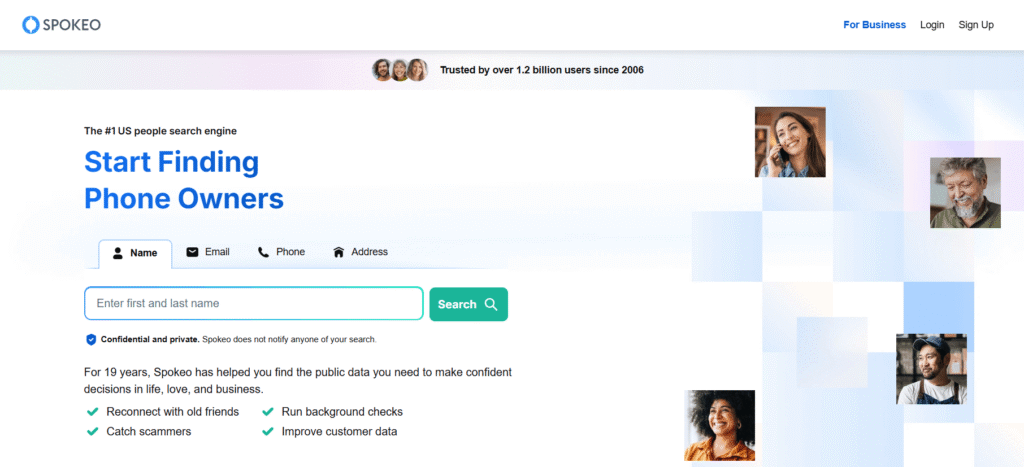
Spokeo helped me find the owner of a phone number quickly and accurately. By providing access to a wide range of public records, I could access details on both landline and mobile numbers. It’s a great option if you need to verify who’s behind a phone number. In my opinion, Spokeo stands out for its extensive database and efficient results.
Spokeo Pricing
| Plan | Price | Features |
| Trial | $0.95 (7 days) | Short-term access, auto-renews |
| Monthly | $29.95 | Full reports, standard access |
2) Intelius
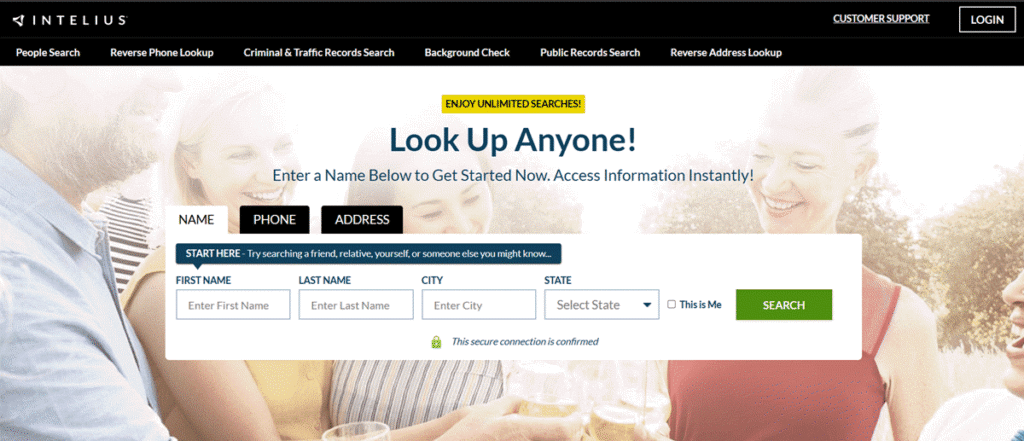
Intelius simplifies the process of discovering who a phone number belongs to. During my analysis, I found that it gives you fast access to personal information such as addresses and criminal records. The platform provides an easy and intuitive interface, making it an ideal solution for anyone who values efficiency and reliability. I could easily see why it is one of the most popular tools for phone number lookup services.
Intelius Pricing
| Plan | Price |
| Basic App Access | $0.95 (5-day trial for People Search); $1.99 (5-day Reverse Phone trial) |
| 1 Month | $25.11 |
3) PeopleSmart
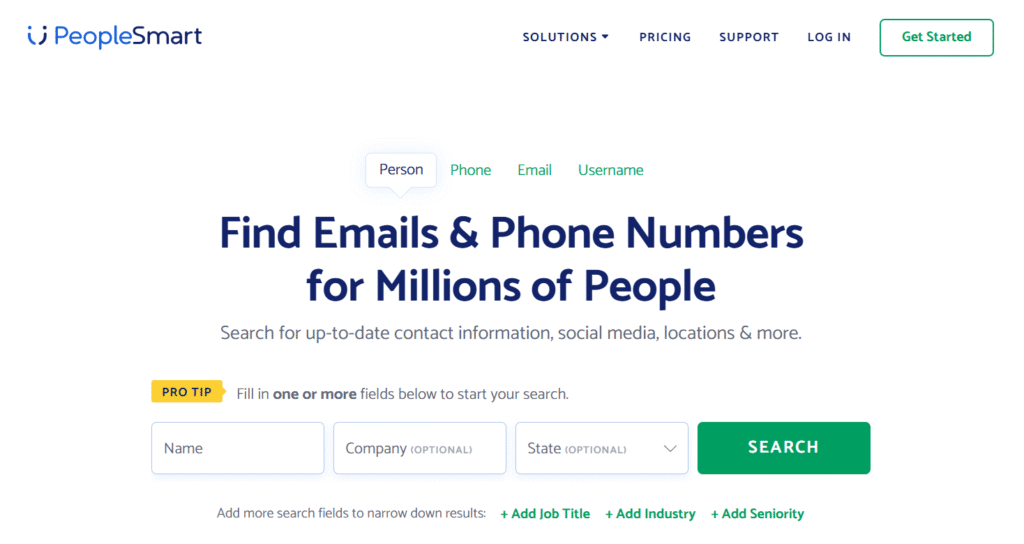
PeopleSmart is perfect for those who want to know who’s behind a phone number. I particularly liked how it provided detailed information without any hassle. In my experience, I’ve found that it’s one of the easiest ways to quickly get insights into an unknown caller’s identity. With a simple search, you get more than just a name; you can uncover details about their address and social media activity, which can help make more informed decisions. For anyone looking for a fast, reliable phone number lookup tool, PeopleSmart is a superior choice.
PeopleSmart Pricing
| Plan | Price |
| Basic App Access | $1 for 7-day trial (casual), $5 for 7-day trial (Plus) |
| 1 Month | $29 |
4) BeenVerified
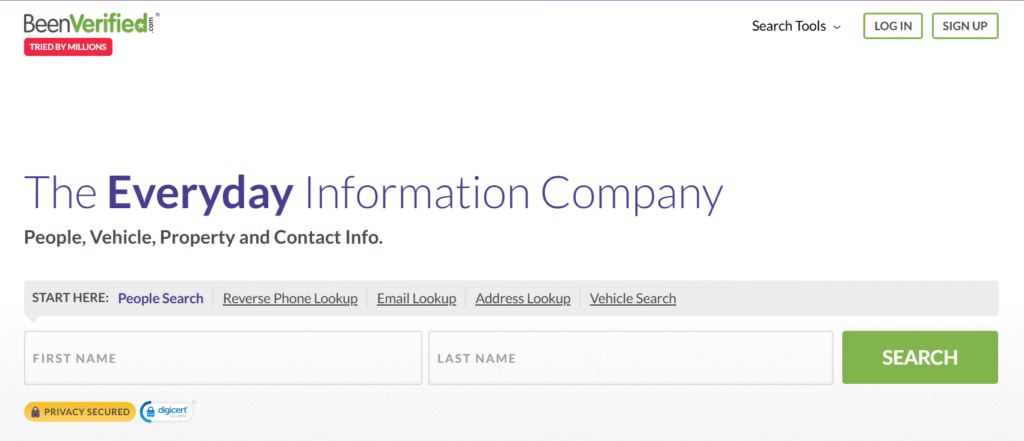
BeenVerified simplifies the process of digging into background details that are usually hard to find for the average person. I tested the reverse phone lookup to see how it handles various types of mobile and landline data. It is essential to have a tool that keeps its records as fresh as possible. I believe this helps you avoid answering calls from people who might be trying to scam you. It is a most effective method for managing your personal security. I am impressed with the speed of the search results.
BeenVerified Pricing
| Plan | Price |
| 1 month Membership | $36.89 /mo |
| 3 month Membership | $23.98 /mo |
2. Enter the Phone Number Correctly
- Always use the international phone number format (e.g., +1 for the U.S., +44 for the UK).
- Avoid adding extra symbols like dashes or parentheses when entering the number.
Tip: Double-check the number to make sure it’s correct before searching!
3. Initiate the Lookup
- After entering the number, click the search or “Lookup” button to start the process.
- Some sites might ask you to confirm you’re not a robot—just follow the verification steps.
4. Review the Results
- The lookup will give you details such as the owner’s name (if available), location, and carrier information.
Tip: Some services may show additional links to public social media profiles related to the number.
5. Use Advanced Filters (If Available)
- Some tools offer filters to narrow your search, like location or service provider.
- Advanced features may give you more in-depth information about the owner or even offer background checks.
6. Respect Privacy and Legal Limits
- Always use the information responsibly and within the boundaries of privacy laws.
Warning: Not all numbers will have available data, especially if they’re unlisted or from newer providers.
Method 2: Social Media Search
Social media platforms are surprisingly effective for tracing a phone number back to its owner — if you follow a structured approach.
Steps to Follow:
- Search directly on Facebook
- Go to Facebook’s search bar and type the phone number (with country code).
- Review any matching profiles that appear, as many users link their number to their account.
- Try LinkedIn and Snapchat
- Enter the number in LinkedIn’s search bar to find professional profiles.
- On Snapchat, use the “Add by Phone Number” option — the account appears if it’s linked.
- Sync contacts on Instagram
- Go to Settings → “Discover People” → sync your contacts.
- Instagram surfaces accounts tied to numbers saved in your phone.
- Run a Google search
- Type the number in quotes (e.g., “+1XXXXXXXXXX”) in Google to uncover any public social media mentions.
Practical Tips:
- Always include the country code for accurate results.
- Cross-check findings across multiple platforms for reliability.
Common Mistakes to Avoid:
- Relying on a single platform — privacy settings vary widely.
- Assuming results are current — SIM cards change ownership frequently.
- Using unverified third-party apps that may harvest your personal data.
Note: Only search for phone numbers you are legally and ethically permitted to investigate. Respect privacy laws in your region.Method 3: Check Public Databases
Public databases make tracing a phone number’s owner more accessible than ever — if you know exactly where and how to look.
Steps to Follow:
- Start with a free reverse phone lookup tool
- Visit trusted platforms like Truecaller, Whitepages, or NumLookup.
- Enter the full phone number, including the country code, into the search bar.
- Hit Search and review the results — most free tools return the owner’s name and carrier instantly.
- Check the FCC’s Reassigned Numbers Database (reassigned.us)
- Enter the number to verify if it has been recently reassigned to a new owner.
- This step helps avoid acting on outdated ownership information.
Practical Tips:
- Always use the international format (e.g., +1XXXXXXXXXX) for accurate matching.
- Cross-reference results across two or more databases for reliability.
Common Mistakes to Avoid:
- Trusting a single database — no tool covers 100% of numbers.
- Overlooking VoIP or virtual numbers, which often return limited data.
- Using results for unlawful purposes — always comply with local privacy laws and the FCRA.
Step-by-Step Workflow
- Run a free reverse lookup first. Enter the number on Truecaller, NumLookup, or Whitepages. These tools query carrier records and public databases instantly, often returning the owner’s name and location within seconds.
- Cross-check on Google. Type the number in quotes — e.g., “+1XXXXXXXXXX” — to surface any public mentions across forums, business listings, or social profiles that lookup tools may miss.
- Search directly on social platforms. Try Facebook, LinkedIn, and Snapchat’s contact-sync feature. Many users link their number to at least one account, making platform-native searches surprisingly effective.
- Escalate to a paid people-search tool if needed. Platforms like Spokeo or BeenVerified aggregate public records, address history, and linked profiles into one consolidated report.
- Verify the FCC Reassigned Numbers Database. If ownership details seem inconsistent, confirm at reassigned.us whether the number recently changed hands.
Effective Methods for Identifying Phone Number Ownership
In today’s world, finding out who owns a phone number is more important than ever. Whether you’re screening potential scam calls or just verifying a contact, having a reliable way to track down the owner is a huge help.
Phone number lookup tools have come a long way, and their accuracy is improving with each passing year. These services pull data from a variety of places—public records, online directories, and even social media profiles. What’s more, the way they gather and present this information has become more transparent, helping users feel confident in what they’re getting.
But it’s not all seamless. As phone scams continue to rise, many lookup services are prioritizing data protection. Some services do a better job of keeping your own information private, so you don’t have to worry about your details getting exposed in the process. While the technology has definitely advanced, it’s worth taking a minute to check the reliability and privacy policies of the service you’re using.
Common Mistakes to Avoid
- Relying on a single lookup tool. No database is comprehensive. One platform may flag a number as unregistered while another returns full owner details. Always cross-reference at least two sources before drawing conclusions.
- Ignoring number type before searching. VoIP, prepaid, and spoofed numbers behave differently from standard mobile lines. Treating them the same wastes time and produces misleading results.
- Accepting outdated records as current. Public databases don’t update in real time. A number reassigned six months ago may still show the previous owner’s name — always cross-check with the FCC Reassigned Numbers Database at reassigned.us.
- Skipping the country code. Entering a number without its international prefix frequently returns zero results or pulls unrelated records entirely.
- Using third-party apps with unclear data policies. Several free lookup tools monetize your search data. Stick to established, transparent platforms to protect your own privacy in the process.
- Assuming no result means untraceable. A blank response often signals strong privacy settings — not a dead end. Switching methods, such as moving from a lookup tool to a social platform search, frequently surfaces what databases cannot.
FAQs
How accurate are reverse phone lookup tools?
Reverse phone lookup tools can provide fairly accurate information, but they aren’t foolproof. Data comes from public records, phone directories, and user-submitted sources, which means some numbers may not be listed. Accuracy varies by service, with premium tools offering more detailed reports. Keep in mind, landline numbers are easier to trace than mobile or VoIP numbers.
Can I trace a phone number for free?
Yes, some services offer free reverse phone lookup options, but they usually provide limited information. You may get basic details like the location and carrier of the phone number. For more in-depth results, like the owner’s name or address, a paid service is typically required.
What’s the best service for finding who owns a phone number?
Some of the best services for tracing phone numbers include TruthFinder, BeenVerified, and Intelius. These platforms offer detailed reports, including names, addresses, and social media profiles. For a reliable experience, choose a service with a solid reputation and transparent data sources.
Can I trace a VoIP or burner number?
Tracing a VoIP or burner number is more challenging than a regular phone number. These numbers are often used for privacy or anonymity, making them harder to track. Some reverse lookup tools may identify the service provider or general location, but detailed information is usually unavailable due to the nature of these services.
Is it legal to use reverse lookup tools?
Yes, using reverse phone lookup tools is legal for personal use, as long as it complies with privacy laws in your area. However, using these tools for harassment, stalking, or other unlawful activities is prohibited. Always ensure you’re using the information responsibly and ethically.