How Reverse Phone Lookup Works
What Actually Happens When You Run a Reverse Phone Lookup?
Most people imagine reverse phone lookup as a kind of digital magic trick. You type in a number, hit search, and a name appears like a rabbit from a hat. The truth is more layered and far more interesting.
Behind that simple search box sits a stack of moving parts. The system pulls from carrier records, public databases, web mentions, and crowdsourced reports. Knowing how those layers work changes how you use these tools. It also helps you tell good services apart from sketchy ones.
Let me walk you through what’s really going on.
Why This Matters Right Now
The numbers paint a serious picture. In 2024, US consumers reported losing $12.5 billion to fraud, a 25% jump over 2023. The FTC processed 2.6 million fraud reports last year alone. Phone calls remained the second most common contact method scammers used. That single fact explains why reverse phone lookup has gone mainstream.
Here’s a story that stuck with me. A freelance designer received a vague text last spring offering “$4,000 for a quick logo refresh.” Her gut said scam, and she nearly deleted it. Instead, she ran the number through a lookup tool first. It traced to a small marketing agency in Portland with a real website. She replied, the gig was real, and it became her largest single project that quarter.
That’s the upside most articles forget to mention. Reverse lookup isn’t just a scam shield. It’s also a tool for verifying the unknown numbers worth answering.
The Anatomy of a Lookup
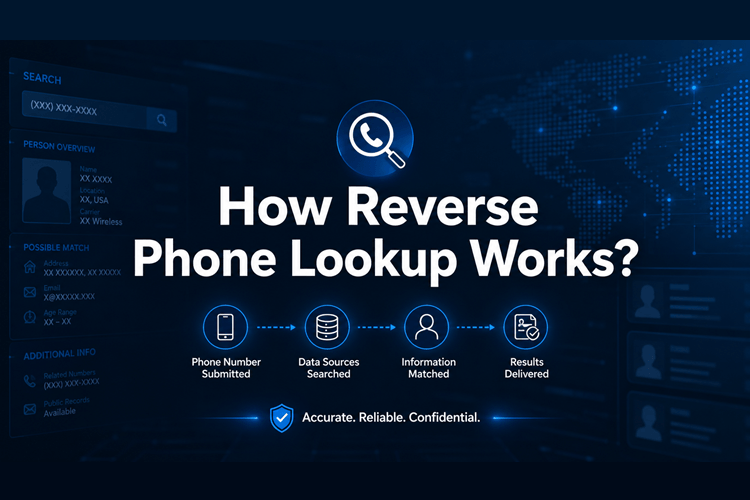
When you submit a number, the service runs four operations in quick succession. None of them are glamorous. Together, they’re surprisingly effective.
Carrier Identification and Line Type
The service first cleans your input by stripping dashes, spaces, and country codes. Then it queries telecom routing databases to identify the carrier. This step alone tells you a lot. A “mobile” line traced to Bandwidth or Twilio usually signals a VoIP number. Scammers favor VoIP because it’s cheap and disposable.
CNAM Database Lookup
Carriers maintain a system called CNAM, short for Caller Name. Think of it as the official subscriber directory baked into the phone network. When your phone displays “John Smith” on an incoming call, that’s CNAM at work. Lookup services license access to these records. Coverage is strong for landlines and postpaid mobile lines. It thins out fast for prepaid SIMs and VoIP numbers.
Public Records and Web Crawling
Court filings, business registrations, voter rolls, and property records often contain phone numbers. Crawlers also harvest numbers listed publicly on company sites and old directories. The lookup engine cross-references these sources to associate a number with a name or address. The match isn’t always exact. The trail, however, is usually informative.
Crowdsourced Reports and Risk Scoring
This is the modern layer that flags new scams within hours rather than weeks. When 800 users in one week tag a number as “Auto Warranty Robocall,” that signal becomes visible. Apps like Truecaller, Hiya, and Robokiller depend heavily on this data. Risk scores get calculated using machine learning models trained on calling patterns.
What the Phone Network Itself Knows
Here’s a layer most articles skip entirely. Since June 2021, the FCC has required major US carriers to deploy a system called STIR/SHAKEN. The framework digitally signs outgoing calls so receiving carriers can verify the number isn’t spoofed. It assigns one of three attestation levels. Level A means fully verified, Level B is partial, and Level C is gateway-only.
STIR/SHAKEN doesn’t tell you who’s calling. It tells you whether the displayed number is genuinely theirs. That distinction matters more than people realize. A spoofed call can still pass as authenticated if the spoofer routes through a compliant but unscrupulous provider. Some advanced lookup services now blend STIR/SHAKEN data into their risk scores.
Walking Through a Real Lookup
Let’s say a number with a Denver area code calls you twice on a Wednesday afternoon. Here’s how a thoughtful phone number lookup unfolds in practice.
You enter the digits into a reputable service like Whitepages, Spokeo, or BeenVerified. Within seconds, the dashboard shows a mobile number on T-Mobile, registered in central Colorado. Public records associate it with a name and a residential address. User reports show three flags in the past 60 days, all marked as “telemarketer.” Your instinct was right, and answering would have meant a sales pitch.
Now picture a different result. The number traces to a VoIP line, no carrier identity match, and 47 spam reports in the past week. That’s a five-second decision to block.
The Honest Limitations
No reverse lookup tool is bulletproof. Several scenarios produce weak or misleading results consistently.
Prepaid SIMs sold over the counter rarely carry verified subscriber data. VoIP numbers from services like Google Voice can be issued in minutes and abandoned just as fast. Recently ported numbers may show outdated owner records for weeks. Spoofed caller IDs are a separate problem. The number you see may not be the number that actually placed the call.
The scale of the problem helps explain why. According to YouMail’s data, Americans received roughly 5 billion robocalls in April 2025 alone. That’s about 165 million calls every day. Lookup tools have improved, yet scammers iterate faster than databases can refresh.
Choosing a Service Without Getting Burned
Three habits separate effective lookups from frustrating ones.
First, never trust a “free” report that suddenly demands a credit card. Legitimate free tiers show carrier and basic location data. Anything deeper usually requires a real subscription. Second, check at least two services for serious decisions. If both flag the number as risky, the signal is reliable. Third, read the most recent user reports rather than trusting the aggregate score alone. A number with 200 old reports and zero recent ones may have changed hands entirely.
There’s also a quieter best practice that experienced researchers follow. Always cross-check a lookup result against a Google search of the same number in quotes. Legitimate businesses leave a public footprint that scammers usually don’t.
The Takeaway
Reverse phone lookup isn’t a magic answer. It’s a lens that organizes scattered public data into something useful. Once you understand the moving parts, including carrier metadata, public records, crowdsourced flags, and authentication signals, you stop trusting the tool blindly. You start using it the way investigators do, as one input among several.
The next unknown number that lights up your screen will land differently. You’ll know what the lookup is checking, what it can confirm, and what it simply cannot. That’s a small piece of digital literacy worth carrying into a world where roughly half of all incoming calls now go unanswered.