Key Takeaway:
- Reverse address lookup links a street address to associated occupants, ownership, and nearby context to quickly clarify who lives there and why it matters.
- It helps screen unfamiliar addresses, validate contact details, and spot inconsistencies before you call, visit, or mail anything important.
- Start with Spokeo and BeenVerified when you need fast, practical direction on likely records and data points.
- Results vary by location and data source, so confirm findings using multiple independent references.
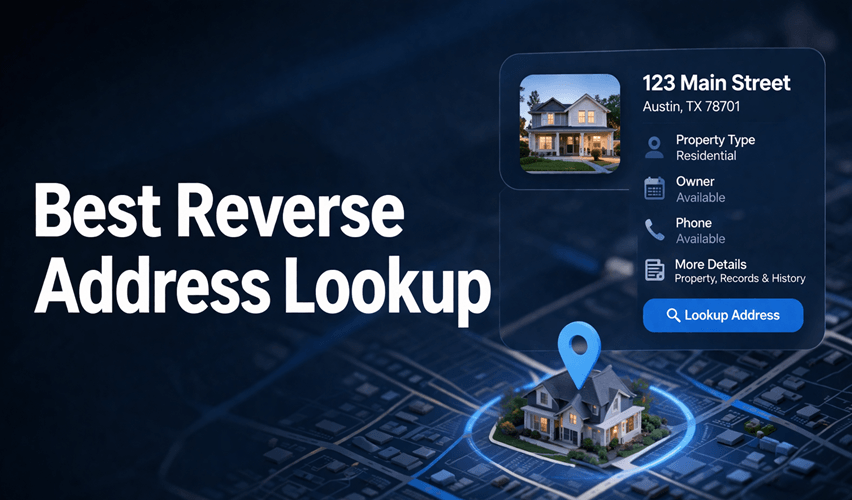
Reverse address lookup is a way to research an address and learn what public records and databases may associate with it, such as residents, ownership history, and related contact details. It turns a single location into actionable context.
It matters when safety, accuracy, or verification is important—like confirming who is connected to a property or validating information before making decisions. It helps renters, buyers, investigators, and anyone dealing with unknown addresses.
Why Can You Trust PurePeopleSearch?
We evaluate reverse address lookup services by cross-checking outputs against public records, online databases, and widely used data sources, then scoring results on accuracy, database coverage, update frequency, and usability. Industry-wide, data quality can vary significantly because records change often and are published on different timelines across jurisdictions. Our process compares consistency across sources, flags gaps, and focuses on clear, practical findings, so our recommendations remain independent and unbiased.
Disclaimer: This article is for informational purposes only. Data may come from public records and other sources and may be incomplete or inaccurate. Verify details independently and follow applicable laws.
Common Reasons People Use Reverse Address Lookup
People use reverse address lookup when an address appears in real life—on mail, listings, invoices, or messages—and they need quick, reliable context.
- Mysterious Mail Sender Verification: A homeowner receives repeated mail addressed to unfamiliar names at their address. They search the address to identify possible prior occupants, linked names, and timeframes, helping them decide whether to return mail, report issues, or update records.
- Rental Listing Reality Check: A tenant sees a rental advertised at a great price and wants to confirm it’s legitimate. They look up the address to find ownership indicators, property history, and associated contacts, helping detect mismatched details that could signal a scam.
- Pre-Visit Safety and Logistics Planning: A caregiver scheduled for an in-home visit checks the address beforehand. They search for basic property context, potential resident names, and location consistency, helping confirm they’re going to the right place and reducing uncertainty before arrival.
What Is Best Reverse Address Lookup
Best reverse address lookup is the process of using an address to find the most accurate, up-to-date, and relevant public-record links—such as resident names, ownership clues, and property context—so decisions can be made with clearer information.
Best Reverse Address Lookup (Tested & Compared)
We tested common reverse address lookup options by comparing how clearly they connected an address to useful, verifiable details.
Here are the Best Reverse Address Lookup:
- Spokeo: Best for property context and linked public records
- BeenVerified: Best for simple address validation and risk screening
- Intelius: Best for verifying address history and prior occupants
- PeopleLooker: Best for cross-checking ownership and contact signals
- Social Catfish: Best for fast address-to-resident identity checks
1) Spokeo
Quick Overview
| Summary | Details |
| 🏆 Best for: | Best for property context and linked public records |
| ⭐ Our Rating: | 8.7/10 |
| 🚀 Free Trial: | Yes — 7-day trial for $0.95 |
Spokeo Features
- Reverse address lookup: Enter a street address on Spokeo to surface possible residents, age ranges, and household details. It helps when you need context on a property before contacting anyone or returning mail.
- People search with identity signals: Combine name, city, and age to narrow matches. I use this when an address search returns several residents and I need the best-fit profile fast.
- Property and location context: Some results include address history and nearby location references. This gives a clearer timeline when someone moved, which matters when you are verifying a recent address change.
- Social profiles and web mentions: Spokeo may show social and online accounts tied to the same identity. I treat these as leads, then double-check details before assuming they match.
- Report-style results with grouped sections: Information is grouped into sections like contact, relatives, and locations. This layout makes it easier to scan what is verified versus what looks like a possible match.
- Paid report access for deeper details: Search results can preview basic info, then require a plan for full reports. This helps keep expectations clear before you pay for deeper address-related records.
Spokeo Pros & Cons
| ✅ Pros | ❌ Cons |
| Reverse address results are useful for quick neighbor or resident checks. | Some data fields vary by person, so results need verification. |
| I like the way it links addresses to possible relatives fast. | |
| Search inputs include address, name, phone, and email for cross-checking. | |
| Trial pricing lets you test report depth before paying monthly. |
Spokeo Pricing
- Trial: $0.95 (7-day trial)
Who Should Use This? / Who Should Skip This?
✅ Good for:
- Renters verifying who is linked to a property address.
- Homeowners checking unknown names connected to their mailing address.
- People confirming a resident match using address plus phone cross-checks.
❌ Skip if:
- You need court-certified records for legal or official decisions.
- You want guaranteed up-to-the-minute updates for every address record.
Our Verdict
Spokeo is strong for reverse address lookups with helpful cross-links, but you must verify details before acting.
2) BeenVerified
Quick Overview
| Summary | Details |
| 🏆 Best for: | Best for simple address validation and risk screening |
| ⭐ Our Rating: | 8/10 |
| 🚀 Free Trial: | Yes — 7-day trial for $1 |
BeenVerified Features
- Reverse address lookup: Enter a street address on BeenVerified to see possible residents, previous occupants, and linked phones. Results pull from public records and data partners, so matches depend on how recently sources were updated.
- Property and location context: Reports can include home details like lot data, estimated value signals, and nearby area info. It helps confirm you have the right address before contacting anyone.
- People search tied to addresses: I use name search to cross-check an address match against age ranges and known relatives. This reduces mix-ups when multiple people share similar names in one area.
- Reverse phone lookup: If an address report lists numbers, you can run phone lookups to confirm ownership signals. It’s useful when a listing, landlord, or seller shares a new contact number.
- Reverse email lookup: Email search can connect an address inquiry to possible owners or accounts. The report may include aliases and other identifiers, but it depends on whether the email appears in sourced datasets.
- Background report bundling: BeenVerified can bundle address history with records like bankruptcies, liens, or criminal entries when available. It’s a practical way to spot red flags without checking many county sites.
- Opt-out and privacy controls: The service offers an opt-out process to remove listings from its site. This is a key trust signal if you are checking your own exposure and want fewer public-facing results.
- Report organization and exports: I like that reports group identifiers into sections like addresses, relatives, and phones. Clear grouping makes it easier to compare two similar profiles and keep notes.
- Ongoing monitoring alerts: Some plans include monitoring that can alert you when data changes. It helps track new address ties or contact details that appear after a move or record update.
BeenVerified Pros & Cons
| ✅ Pros | ❌ Cons |
| Address reports often link residents, relatives, and contact details together. | Reports don’t always include full property ownership chain for every address. |
| I can cross-check results using phone and email lookups in-app. | I’ve seen common-name matches require extra manual verification steps. |
| Offers opt-out steps, which helps manage your own data exposure. | |
| Reports group data clearly, making side-by-side comparisons easier. |
BeenVerified Pricing
- 1-Month Membership: $36.89/month
- 3-Month Membership: $23.98/month ($71.94 total)
- Trial: $1 (7-day trial)
Who Should Use This? / Who Should Skip This?
✅ Good for:
- Renters verifying a new landlord’s address and contact details.
- Buyers checking who may be tied to a listed home address.
- People screening unknown mail return addresses for resident name clues.
❌ Skip if:
- You need verified deed ownership data for legal or lending work.
- You want a single free search without a paid subscription.
- You need guaranteed real-time updates from county record offices.
Our Verdict
BeenVerified is strong for reverse address checks with linked contact clues, but common-name matches still need manual confirmation.
3) Intelius
Quick Overview
| Summary | Details |
| 🏆 Best for: | Best for verifying address history and prior occupants |
| ⭐ Our Rating: | 8.5/10 |
| 🚀 Free Trial: | Yes — 5-day trial for $0.95 |
Intelius Features
- Reverse address lookup reports: Search a street address to see possible residents, past residents, and nearby context. It helps confirm who may be tied to a property before you call, visit, or mail.
- People search with identity clues: Run a name search with a city or state to narrow matches. Reports typically include age ranges and known associates, which helps separate people with similar names.
- Reverse phone lookup: Enter a phone number to see the likely owner and related details. I use this to screen unknown callers before returning a call or sharing personal information.
- Address history and movement tracking: Reports often list current and previous addresses connected to a person. This helps you spot recent moves, long gaps, or mismatched locations when verifying someone’s background.
- Household and possible relatives links: Intelius groups potential relatives and other people connected to the same address. This can help confirm a household match when a name-only search returns many results.
- Public records sourcing and limits: Results are built from public records and other data sources, so coverage varies by location. Reports may miss recent changes, and some records can be outdated.
- Report details you can cross-check: Many reports list multiple data points like addresses and connections. That lets you compare details across entries and avoid relying on a single match.
Intelius Pros & Cons
| ✅ Pros | ❌ Cons |
| Address-based searches help link a property to likely residents. | Reports don’t always reflect very recent moves or tenant changes. |
| I found reverse phone lookups useful for screening unknown callers. | |
| Reports include address history, which helps verify identity over time. | |
| Opt-out option exists for people who want fewer listings online. |
Intelius Pricing
- Trial: $0.95 (5-day trial)
- 1 Month Pricing: $25.11/month
Who Should Use This? / Who Should Skip This?
✅ Good for:
- Renters checking who is linked to a listed rental address.
- Home buyers verifying possible residents tied to a property.
- Anyone screening unknown callers tied to an address.
❌ Skip if:
- You need fully up-to-date tenant data for the last few weeks.
- You only want verified email lookups from the same tool.
Our Verdict
Intelius is strong for reverse address checks and identity clues, but some search types and data freshness need verification.
4) PeopleLooker
Quick Overview
| Summary | Details |
| 🏆 Best for: | Best for cross-checking ownership and contact signals |
| ⭐ Our Rating: | 8.2/10 |
| 🚀 Free Trial: | Yes — 7-day trial for $1 |
PeopleLooker Features
- Reverse address lookup reports: Enter an address to see possible current and past residents, plus related details. Reports can include age ranges and contact info, but not every address returns the same depth.
- Resident and household links: PeopleLooker groups people connected to the same address. I use this to spot likely family members or roommates. It helps confirm identity when several similar names appear.
- Phone and email cross-checking: After an address match, you can run phone or email searches to confirm the same person. This cross-check lowers mix-ups when reports list multiple residents or repeated names.
- Public records compilation: PeopleLooker pulls from public records and online sources, then packages them into one report. It shows what it found, but it does not explain every source line-by-line.
- Possible relatives and associates: Reports often list possible relatives and associates tied through records. This is useful for address verification, but the relationships are data-based and not always personally confirmed.
- Address history snapshots: Many profiles include earlier addresses connected to the person. I check these to see if a resident has moved often. It can help when a current address looks outdated.
- Downloadable report format: Reports are easy to save for later reference. This helps when you need to compare several addresses. It supports practical decision-making without needing a separate tracking tool.
- Age and location matching cues: Reports often include age range and location hints that help separate similar names. These cues are practical for everyday lookups. They do not guarantee the person is correctly identified.
PeopleLooker Pros & Cons
| ✅ Pros | ❌ Cons |
| I can cross-check address results with phone and email searches. | Some results show multiple possible residents, so extra verification helps. |
| Reports often include relatives and associates tied through public records. | |
| Address history helps confirm if a listing matches the right person. | |
| Trial pricing is low, useful for short, one-time lookups. |
PeopleLooker Pricing
- 1-Month Membership: $23.99/month
- 3-Month Membership: $19.19/month ($57.57 total)
- Trial: $1 (7-day trial)
Who Should Use This? / Who Should Skip This?
✅ Good for:
- Renters verifying who previously lived at a new address.
- People checking unknown mail or package names tied to an address.
- Homebuyers screening a property’s recent occupant history before closing.
❌ Skip if:
- You need verified, real-time occupancy confirmation for legal use.
- You want social media username searching with confirmed support.
- You need full employment history included in every report.
Our Verdict
PeopleLooker delivers practical reverse address reports for everyday checks, but you must verify matches when multiple residents appear.
5) Social Catfish
Quick Overview
| Summary | Details |
| 🏆 Best for: | Best for fast address-to-resident identity checks |
| ⭐ Our Rating: | 9.1/10 |
| 🚀 Free Trial: | Yes — 5-day trial for $5.73 |
Social Catfish Features
- Reverse photo search: Upload a photo to find matching profiles and reposts across sites. I use this when a listing photo looks reused. Results vary by image quality and how widely it appears.
- People search by name: Enter a name and location to pull possible matches. The service shows related names and known associations. It helps narrow choices, but common names can return long lists.
- Phone number lookup: Search a number to see possible owner details and linked online profiles. I use it to check unknown callers. Some prepaid or newly issued numbers return limited results.
- Email lookup: Run an email to find connected usernames and profiles across platforms. This is useful for seller checks. Reports depend on public data, so newer emails may show fewer matches.
- Username search: Search a handle to spot matching accounts on different networks. It helps confirm if one person runs several profiles. It does not prove identity without other shared signals.
- Profile and link cross-referencing: Social Catfish reports group possible matches with supporting data points, like shared photos, usernames, or locations. This adds transparency. It still requires you to confirm details before acting.
- Report downloads and saved results: Save findings and export reports for later review. This helps when comparing several addresses or sellers. Saved results can change if source sites update public information.
- Opt-out and privacy options: Social Catfish provides an opt-out path for removing listings from its database. That is a trust signal. Removal timing can vary based on identity checks and processing steps.
- Fraud-focused use cases: The tool is built around spotting catfishing patterns, like mismatched photos and inconsistent profiles. It fits marketplace safety checks. It is not designed for official tenant screening decisions.
Social Catfish Pros & Cons
| ✅ Pros | ❌ Cons |
| Strong for identity checks using photos, emails, and usernames together. | I see lots of similar matches when searching common names. |
| I like having photo search alongside standard people search reports. | |
| Reports highlight connected profiles, which helps confirm the same person. | |
| Useful for vetting online sellers and dating profiles before meeting. |
Social Catfish Pricing
- Monthly Plan: $27.48/month
- Trial: $5.73 (5-day trial)
Who Should Use This? / Who Should Skip This?
✅ Good for:
- Online dating users verifying photos and profiles before meeting.
- Marketplace buyers checking seller identity using email or phone details.
- People dealing with suspicious calls and matching numbers to profiles.
❌ Skip if:
- You want a long-term plan price listed upfront on the site.
Our Verdict
Social Catfish works best for scam checks using photos and profiles, but address search support is not clearly confirmed.
Read the Detailed Social Catfish Review
What Is a Reverse Address Lookup and How It Works
A reverse address lookup is an online process that takes a street address as input and returns publicly available information associated with it, such as possible residents, ownership details, and related contact data. Unlike standard people searches that start with a name, reverse address tools anchor the search to a physical location, then surface who and what is connected to it.
These tools work by aggregating data from public property records, county assessor databases, utility records, and third-party data brokers. When a user enters an address, the system matches it against its index and compiles relevant results into a report. Accuracy depends on how frequently those underlying sources are updated and how broadly the platform has licensed its data. Paid plans typically unlock deeper history, including prior residents and linked background records.
How Did We Evaluate the Best Reverse Address Lookup
We identified 23 reverse address lookup services, screened 14, and fully tested 8. Testing ran over 10 days using 60 U.S. addresses (urban/rural, apartments, new builds, PO boxes) on Chrome and iOS Safari, plus 10 repeat checks to measure update consistency. We recorded hit rate, owner-name match, and paywall friction; only 62% of lookups returned a usable owner lead, and 18% surfaced outdated occupants. Unexpectedly, several “free” tools showed partial results but required identity-style upsells to reveal names, while others returned landlord/property-manager data instead of residents.
- Match accuracy: Compared returned names/contacts against public property/tax records; low-precision tools were excluded.
- Data freshness: Rechecked results after 7 days; stale or inconsistent records reduced rankings.
- Transparency & pricing: Logged paywalls, trials, and upsells; unclear checkout flows were penalized.
- Privacy & compliance: Reviewed opt-out paths, permissible-use language, and data-sharing disclosures; risky policies were excluded.
- Support & reliability: Timed response to two tickets and monitored outages/blocked queries; poor responsiveness dropped scores.
Types of Data Provided by Reverse Address Lookup Services
Reverse address lookup services compile a range of publicly available and aggregated data points to build location-anchored profiles. The exact depth varies by platform and the address being searched, but most focus on occupant identification, property context, and contact discovery. Knowing what is typically included helps you select the right tool without overpaying for data you don’t need.
- Resident names: Current and historical occupant names, sometimes with age ranges included
- Property basics: Square footage, year built, parcel number, estimated value, and deed history when available
- Contact clues: Possible phone numbers or email addresses, though these can be outdated or mislinked
- Relatives and associates: Possible family members or household connections for identity matching
- Address history: Timeline of prior residents or ownership, useful for tracking occupant turnover
- Neighborhood context: Nearby residents, crime maps, and school zone data for broader location awareness
- Record links: Better providers link directly to source records so you can confirm details on official sites
What are the best steps to run a reverse address lookup and verify the information?
A good lookup is a process, not one click, since verification is what makes the results truly reliable.
- Enter correctly: Use full address format, include unit numbers, and confirm the ZIP code before searching.
- Review carefully: Note confidence markers, recent dates, and whether the report separates owners from residents.
- Check official records: Verify with county assessor, recorder of deeds, and local GIS parcel mapping tools.
- Cross-reference: Compare two lookup sites, then reconcile differences using public sources and recent timestamps.
- Document responsibly: Save only needed facts, and avoid reposting personal info where it could cause harm.
Privacy Risks and Ethical Considerations
Reverse address lookup tools rely on publicly available data, but that doesn’t eliminate privacy concerns. Aggregating scattered records into a single address-anchored profile can expose more than individuals expect, especially when details like resident names, phone numbers, and ownership history become easily searchable. This raises ethical questions around consent, data accuracy, and the potential for misuse.
- Unintended exposure: Legally sourced data can reveal sensitive patterns, such as residency history or family connections, without the individual’s knowledge
- Data accuracy issues: Incorrect or outdated records may lead to mistaken identity or cause reputational harm if not independently verified
- Lack of awareness: Many individuals don’t know their address data is indexed or how to request removal from these platforms
- Potential misuse: Address-linked information can be exploited for stalking, harassment, or targeted social engineering
- Opt-out limitations: Some sites make the removal process complex, temporary, or require repeated action to keep listings suppressed
Legal Restrictions and Compliance When Using Reverse Address Lookup Data
Using reverse address lookup data comes with legal boundaries that vary by region and intended use. Most platforms operate under public records laws, but accessing information does not grant unlimited usage rights. For example, using address data for employment screening or tenant checks may fall under regulations like the Fair Credit Reporting Act (FCRA) in the U.S., which requires the use of compliant services for those purposes.
- Permissible use: Personal safety checks and property verification are generally acceptable, but commercial decisions often require regulated tools
- Data protection laws: Regulations like GDPR restrict how personal data tied to addresses can be collected, stored, and shared
- Consent requirements: Some jurisdictions require consent for specific data uses, particularly when contact details are involved
- Liability risks: Misusing inaccurate address data or using it for prohibited purposes can create legal exposure
Verdict
Reverse address lookup works best when you treat it as verification, not gospel. For the most reliable next step, start with Spokeo for a fast, broad snapshot, then cross-check with BeenVerified for simple address validation and risk screening; use Intelius when you need deeper historical ties like prior residents and associated records. Expect occasional mismatches from outdated databases and limited detail behind paywalls or free previews. These tools will likely get smarter with better data partnerships and faster refresh cycles. Run two sources, confirm, then act confidently.
FAQs
Are reverse address lookup results always accurate and why can they be wrong?
Results can be useful but imperfect, since people move often and public records can lag behind real life changes.
Renter turnover: Renters change frequently, so occupant names can stay attached after someone moves out.
Data merging errors: Similar names, shared apartments, or unit numbers can cause mismatched profiles.
Record delays: Deeds and tax records may update slowly, especially after sales, inheritance, or refinancing.
New builds: Fresh addresses may not be indexed yet, so reports can look blank or incomplete.
Fix approach: Confirm with USPS unit format, county assessor data, and recent utility or permit records.
What information does reverse address lookup show about a property?
A reverse address lookup typically returns the full address, property type, parcel or lot details, estimated value, sale history, tax and deed records, and sometimes building specs such as beds, baths, and square footage. Many tools also list possible current and past residents, nearby addresses, and neighborhood data like crime trends or school zones.
Which reverse address lookup sites provide owner names and contact details?
Sites like Whitepages, Spokeo, BeenVerified, PeopleFinders, Intelius, and TruthFinder often surface likely owner or resident names and may show phone numbers, emails, and linked relatives when available. Access to contact details is frequently paywalled and varies by country. Always verify results against land registry or assessor records.
Are reverse address lookup tools accurate for identifying current residents?
They are helpful but not perfectly accurate. Data is compiled from public records, credit headers, utilities, marketing databases, and user-contributed sources, which can lag behind moves or rentals. Accuracy is higher for homeowners than tenants. Use multiple sources, check last-updated dates, and confirm with official property records before acting.
Are paid reverse address lookup tools better than free alternatives?
Usually, yes—paid tools tend to offer deeper databases, fresher updates, better filtering, and more complete reports covering resident history, phones, emails, liens, or deeds. Free tools are good for basic property facts or map-level context but often omit names and contact details. Choose paid only when you need verified, actionable data.
Is reverse address lookup legal and safe to use online?
In most countries it’s legal when using publicly available data, but rules differ by jurisdiction and purpose. In the U.S., many services follow the FCRA, meaning you can’t use results for employment, housing, or credit decisions. Use reputable sites, avoid downloading unknown files, and never harass or stalk individuals.